Blog
Buying New Construction vs. Resale in Woodbury, MN: How to Decide
The real tradeoffs between buying a newly built home and an existing resale in Woodbury — cost, timeline, customization, and the one thing new-construction buyers often skip.
Quick Answer
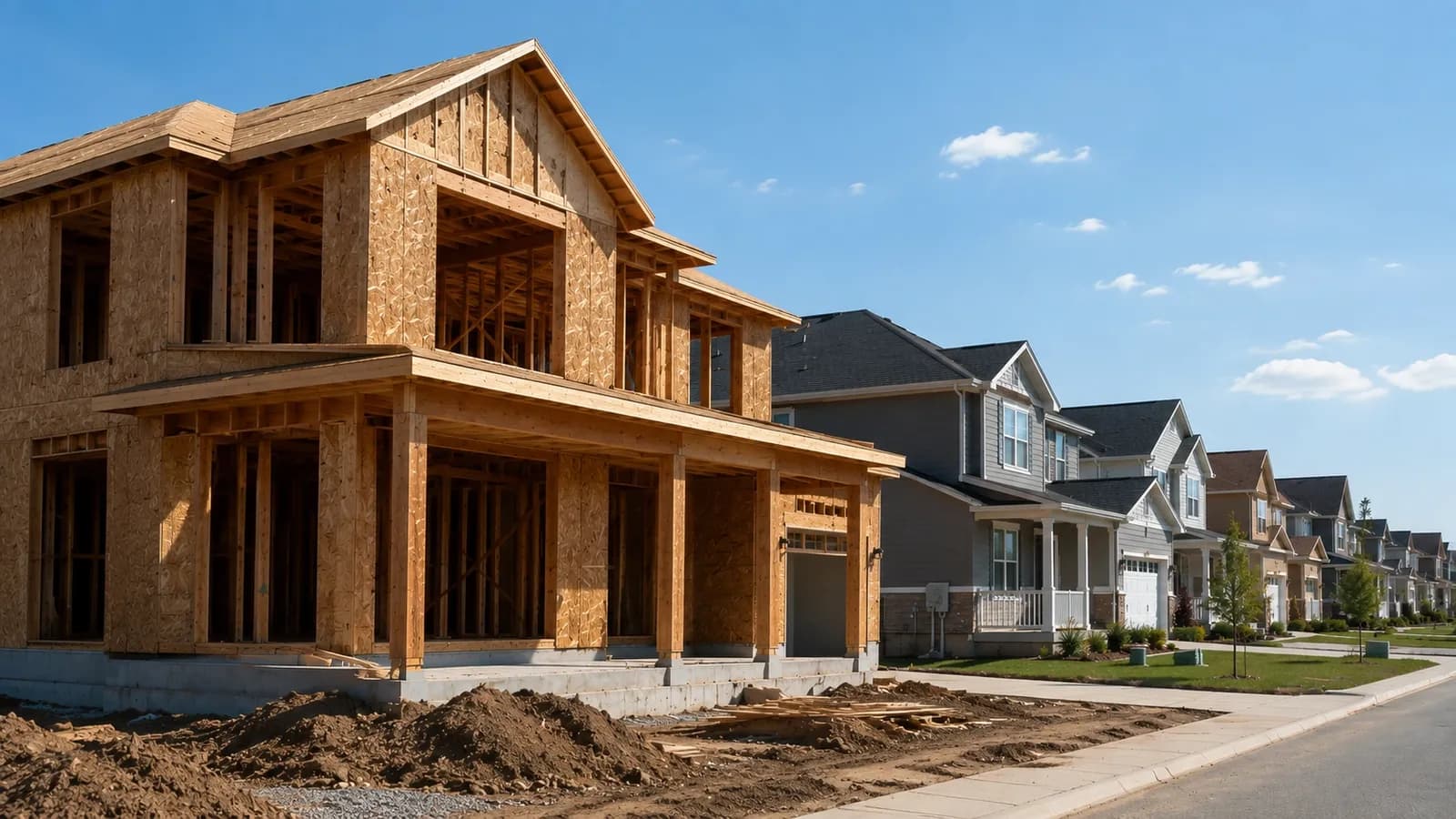
Buying new construction in Woodbury typically means a longer timeline (months, not weeks), more customization control, and a builder's warranty — but usually at a higher price per square foot and in a newer, still-developing neighborhood. Buying resale usually means a faster closing, an established neighborhood with mature landscaping, and more room to negotiate on price — but you take on the home's age-related maintenance as-is. The single biggest mistake new-construction buyers make is touring model homes without their own independent buyer's agent, since the builder's on-site sales representative works for the builder, not for you.
Key Takeaways
- New construction typically takes months to complete and offers more customization, while resale homes are usually move-in ready and close in weeks.
- A builder's on-site sales representative represents the builder, not the buyer — bringing your own buyer's agent from your very first visit typically costs you nothing extra.
- New construction usually comes with a builder's warranty; resale homes rely on the seller's disclosures and your own inspection findings instead.
- New-construction neighborhoods are often still developing — ongoing construction traffic, incomplete landscaping, evolving HOA rules — which is a real tradeoff against an established resale neighborhood.
- An independent home inspection is still worth getting on new construction — a builder's own final walkthrough is not a substitute for a third-party inspector.
"Should we just build new?" comes up in almost every buyer conversation eventually — usually after a few frustrating resale showings. It's a legitimate option, but it's worth understanding as a genuinely different process, not just a different-looking house.
Two Different Products, Two Different Processes
Buying a resale home is largely a negotiation over an existing, finished product — what you see is close to what you get, and your leverage comes from comparables, condition, and market timing. Buying new construction is closer to placing a custom order: you're often buying based on a model home and a set of plans, and much of the "negotiation" happens through selecting options and upgrades rather than haggling over price.
Neither option is objectively 'better'
The right choice depends on your timeline, how much you value customization versus certainty, and how you feel about a still-developing neighborhood versus an established one. Both are legitimate paths to the same goal.
Cost: What You're Actually Paying For
| Factor | New Construction | Resale |
|---|---|---|
| Base price | Often higher per square foot for comparable size | More variable — can be priced below or above comparable new builds depending on condition and market |
| Upgrades and options | Add up quickly — flooring, cabinets, and finishes are frequently upgrade categories, not included in the base price | Already built into the home's existing condition and finishes, for better or worse |
| Negotiating room | Builders are typically firmer on price, but may offer closing cost credits or upgrade incentives instead | Price is often more directly negotiable, especially on homes that have been listed for a while |
| Landscaping and extras | Often an added cost after closing — sod, fencing, window treatments | Usually already in place, mature, and included in what you see |
Dave's Local Insight
I tell new-construction buyers to price out the "walk-in ready" version of the home — landscaping, blinds, a finished driveway — not just the base price on the builder's sheet. It's a common source of budget surprise after closing.
Timeline: Weeks vs. Months
A resale closing typically moves in 30 to 60 days from an accepted offer. New construction runs on a fundamentally different clock.
- 1
Contract and financing
You sign a purchase agreement with the builder and finalize your loan — construction loans and standard mortgages can differ here.
- 2
Foundation and framing
The visible structure goes up; this is often when the home starts to feel real, but there's still significant work ahead.
- 3
Interior systems and finishes
Electrical, plumbing, drywall, cabinets, and flooring — the phase most sensitive to material and labor availability.
- 4
Final walkthrough and closing
You do a pre-closing walkthrough to flag any punch-list items before the builder considers the home complete.
Build timelines are estimates, not guarantees
Weather, material availability, and labor scheduling can all push a completion date. If your current living situation has a hard deadline (a lease ending, a home already under contract to sell), build in a real buffer rather than planning around the builder's optimistic estimate.
The Sales Rep Isn't Your Agent — Bring Your Own
This is the single most common mistake first-time new-construction buyers make. The friendly representative in the model home works for the builder and is paid to get the best outcome for the builder — not for you.
Why bringing your own buyer's agent matters here
- An independent agent reviews the purchase agreement and upgrade contracts with your interests in mind, not the builder's
- In most markets, the builder pays the buyer's agent's commission — meaning representation costs you nothing extra out of pocket
- Your agent can flag which upgrades are genuinely worth paying the builder's price for versus doing after closing with your own contractor
- Once you've toured a model home without an agent and given the builder your contact information, some builders may no longer let an agent represent you — bring your agent from the very first visit
Dave's Local Insight
I've walked buyers through builder contracts that included terms they didn't fully understand until we reviewed it together — not because anyone was acting in bad faith, but because a builder's paperwork is written to protect the builder, same as any other seller's would be.
Warranties, Inspections, and What's Actually Covered
New homes typically come with a builder's warranty covering workmanship and major systems for a set period — but "new" doesn't mean "flawless."
Don't skip these on a new build
- Get an independent, licensed inspection before or at your final walkthrough — a builder's own quality check is not the same as a third-party inspection
- Read your specific warranty terms — coverage periods and what's included vary by builder
- Document every punch-list item in writing during your walkthrough, with photos, rather than relying on a verbal agreement
- Ask what happens if an item on your punch list isn't fixed before closing — get the process in writing
What About the Neighborhood Itself?
A brand-new development often means ongoing construction traffic, immature landscaping, and HOA rules that are still being finalized as more homes are built out. An established neighborhood — see our neighborhood guides for what that actually looks like across Woodbury — offers mature trees, settled HOA dynamics, and a clearer sense of the community you're joining, since it's already built.
Buyers considering new construction should weigh not just the home itself, but the timeline and characteristics of the surrounding development as it completes.
A Simple Way to Decide
Do you need to move within the next 60 days?
Yes
Resale is the more realistic path — new construction's build timeline usually won't fit that window.
No, you have 6-12+ months of flexibility
New construction becomes a genuinely realistic option worth exploring.
Is choosing your own finishes (cabinets, flooring, paint) important to you?
Yes
New construction gives you direct control over these choices from the start.
No, you'd rather see the finished product before deciding
Resale lets you evaluate real, finished spaces rather than choosing from samples and renderings.
Frequently Asked Questions
Is new construction always more expensive than resale? Not always, but it's common for new construction to run higher per square foot once upgrades and finishing costs (landscaping, window treatments, fencing) are factored in — a base price on a builder's sheet often isn't the full walk-in-ready cost.
Do I really need my own agent if the builder already has a sales office? Yes. The on-site representative works for the builder. In most cases the builder pays your agent's commission, so bringing your own representation typically doesn't cost you anything extra.
Does a new home really need a home inspection? Yes. New doesn't mean defect-free — an independent inspector can catch installation issues or code concerns that a builder's own final walkthrough may miss.
Can I negotiate the price on new construction the way I would on a resale home? Builders are often firmer on base price than individual sellers, but many are open to negotiating closing cost credits, included upgrades, or incentives instead — it's worth asking even if a straight price reduction isn't on the table.
Where to Go From Here
Both paths can be the right call — it depends on your timeline, your tolerance for a still-developing neighborhood, and how much you value choosing your own finishes versus seeing exactly what you're getting. If you're weighing both options for your specific situation, reach out directly and I can walk through what's realistically available in Woodbury right now on each side.
Dave's Local Insight
If you do tour a builder's model home, call or text me before you give them your information — once a builder logs you as an unrepresented visitor, some won't let me step in as your agent afterward.
Sources

Written by Dave Brown
REALTOR®, LPT Realty
Dave Brown is a REALTOR® with LPT Realty who has spent his career helping families buy, sell, and settle into life in Woodbury, Minnesota and the surrounding East Metro. He writes Woodbury Living as a local resource first and a business second — every guide is meant to leave you better informed, whether or not you ever work together.
Need help buying or selling in Woodbury?
Book a no-pressure consultation with Dave to talk through your specific situation — no obligation, just straight answers.
Related Articles
What a Home Inspection Actually Covers
Why an independent inspection still matters, even on a brand-new home.
Mortgage Basics in Minnesota
How financing a new build can differ from a standard mortgage.
First-Time Home Buyer's Guide to Woodbury, MN
The full buying process, if resale ends up being the right fit for you.